Does having a research university in town actually change what it costs to buy a house nearby? In most of California, the answer is an easy yes. In Merced, for most of the last decade, the answer has quietly been no. That's the part of the story most housing chatter skips, and it's the part that matters if you're comparing a home near UC Merced against one somewhere else in town this year.
The short version: UC Merced spent seven straight years building like it expected a surge of students that never showed up. Then, this fall, the surge showed up all at once. The question worth asking isn't whether that changes the market near campus. It's whether the housing built specifically to absorb that shock is enough to keep the pressure off single-family neighborhoods, or whether north Merced is about to feel something it hasn't felt before.
The seven-year plateau nobody priced in
UC Merced doubled its physical footprint this decade, adding classroom space, labs and housing under a $1.14 billion expansion plan the UC Regents approved back in 2015. The goal at the time was ambitious: 15,000 students by 2030. Instead, enrollment sat close to 9,000 for seven straight years, and the campus's yield rate, the share of admitted students who actually enroll, became the lowest in the entire UC system at just 4 percent, according to reporting from EdSource. Officials quietly lowered their own target to a more modest 10,000.
That plateau is the reason Merced never developed the housing dynamics people associate with college towns. A state legislative analysis of the campus's first twenty years pointed to the region's affordable housing as one of the few things working in UC Merced's favor when it came to recruiting, both students and the faculty and staff who might otherwise choose a coastal campus. A university that can't fill its own dorms doesn't put pressure on the rental market next door. For years, that's exactly what happened here.
It wasn't always this steady. Fall 2025 actually saw enrollment drop about 5 percent, 111 fewer students than the year before, even after the campus tried waiving application fees system-wide to pull in more interest. If you were only watching the campus, the story going into 2026 looked like continued softness, not a breakout year.
The neighborhood the pressure lands on first
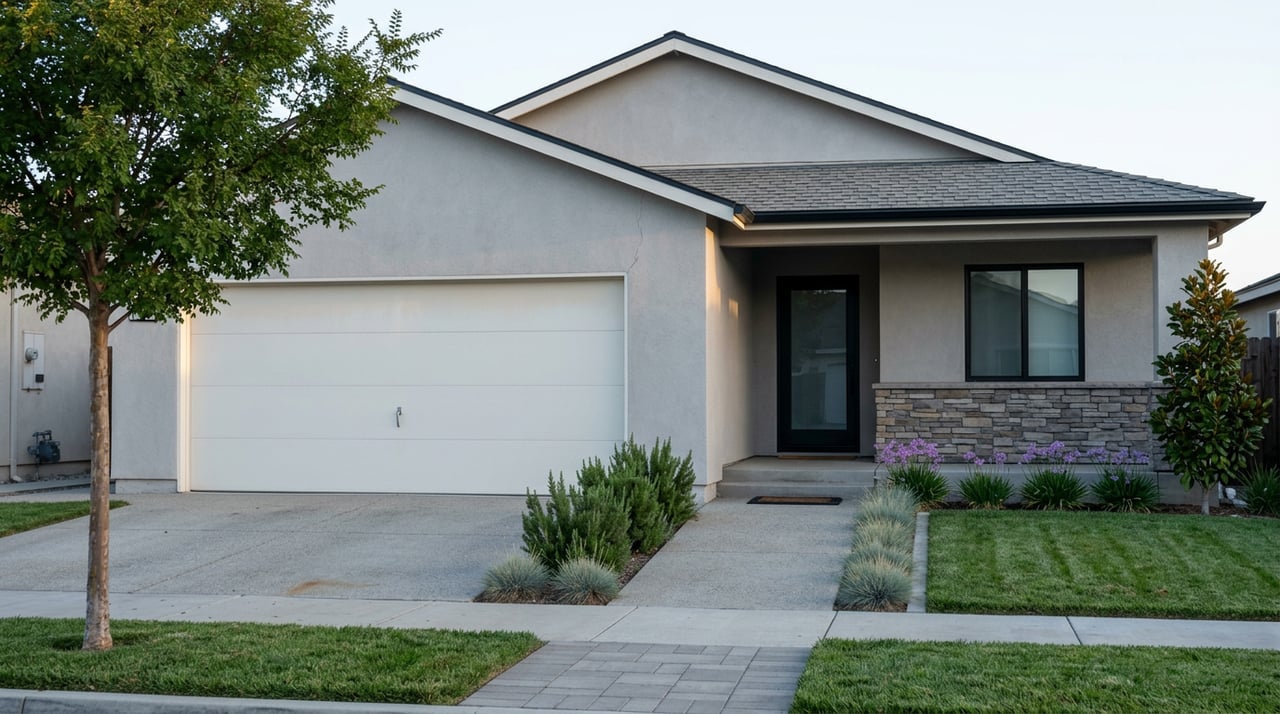
Even during the flat years, one part of the city already felt the strain of students living somewhere other than campus. Bellevue Ranch, the newer subdivision on Merced's north side that sits closest to UC Merced, Merced College and the hospital, became the default landing spot for students who couldn't get campus housing or preferred living off it.
Merced Mayor Mike Murphy put it plainly when a private developer proposed a new off-campus housing project a few years back: students were "living together in homes and neighborhoods that weren't really designed for that," he said, specifically about Bellevue Ranch. That comment predates this year's enrollment jump. It tells you the absorption problem existed even when the campus was stuck at 9,000 students. Whatever happens with the fall 2026 numbers gets layered on top of pressure that was already there.
Two projects built for exactly this moment
The response to that pressure has already been under construction. On campus, a 488-bed complex called Promise Housing is nearing completion with $100 million in funding from the state legislature. It's aimed specifically at income-qualified students, with a chunk of beds set aside for Merced College students transferring in, part of a broader effort called the Merced Promise to keep local transfer students in town through their bachelor's degree. Merced College's own announcement of the new academic year, published August 26, 2026, confirmed students will begin moving in come January, with applications opening in October.
Off campus, a private developer called Shamrock Acquisitions took on a 17-acre site off Yosemite Avenue and Lake Road, about two miles from the university, planning 15 buildings and 885 beds under the name Merced Station. It was explicitly pitched as the closest off-campus option to relieve exactly the kind of pressure Mayor Murphy described near Bellevue Ranch.
Both projects were designed around a campus that had been stuck near 9,000 students for years. Neither was built with this fall's numbers in mind.
Then the number everyone expected finally showed up
UC Merced's own newsroom reported that fall 2026 enrollment grew by 704 students, a nearly 8 percent jump that broke the previous record of 9,148 set in fall 2023. New-student enrollment alone, freshmen and transfers combined, rose 31 percent, adding 748 students for a total of 3,157 incoming students this year.
| Fall term | What happened |
|---|---|
| 2016 through 2023 | Campus physically doubled in size; total enrollment still hovered near 9,000 for seven straight years |
| 2023 | Enrollment hit a new high of 9,148, the previous record |
| 2025 | Enrollment fell about 5 percent, 111 fewer students than the year before |
| 2026 | Enrollment jumped nearly 8 percent, 704 more students than the prior fall, breaking the 2023 record |
There's a detail in the university's own numbers that complicates the simple "college town housing crunch" story, though. Forty-four percent of this year's new students come from Central California, and the growth from the Northern San Joaquin Valley specifically was 20 percent. A meaningful share of the new class is coming from families who already live in the region. Some of those students will commute from an existing family home rather than search for a rental near campus at all. That doesn't erase the demand increase, but it means the fall 2026 numbers won't translate one-for-one into new renters competing for houses in Bellevue Ranch.
What the citywide market actually looks like right now
Zoom out from campus and Merced's broader housing market in mid-2026 looks steady rather than dramatic. Median sale prices across different data sources land somewhere in the $398,000 to $434,000 range depending on whether you're looking at closed sales or active listings and which weeks of the year you're measuring. Inventory has been tight, with roughly 2.8 months of supply as of earlier this year, the kind of number that typically favors sellers.
Days on market tell a less consistent story. Some measures put homes moving in the 35 to 42 day range as of spring 2026, while August 2026 listing data showed a median closer to 87 days, unchanged from the year before. The gap likely comes down to methodology, but the direction is worth noting either way: one dataset found the share of Merced homes selling with a price cut rose from about 1.67 percent to 37.25 percent year over year. A market can have tight supply and more price reductions at the same time. That combination usually means sellers are testing higher prices than buyers are willing to pay, even when overall demand holds up.
None of that citywide data captures what happens specifically in Bellevue Ranch or the streets closest to campus. That's the piece that depends on how well Promise Housing and Merced Station absorb this year's enrollment jump, not on the citywide median.
What this means if you're comparing Merced neighborhoods
If you're weighing a home near UC Merced against one somewhere else in the city, the proximity to campus, the hospital and Merced College is a real convenience, and it's part of why Bellevue Ranch has drawn steady interest for years. What's different this year is that the demand variable behind that convenience just became less predictable than it's been since the campus opened.
Promise Housing has a fixed 488 beds and an income-qualified, transfer-focused mandate, so it won't catch every student who wants off-campus housing. Merced Station adds a meaningful chunk of private beds, but even 885 beds is a specific number against a one-year enrollment jump of 704 students and a 31 percent surge in new students alone. If enrollment keeps climbing toward the university's revised goal of 10,000, the question of whether Bellevue Ranch absorbs the overflow again, the way it did during the flat years, is worth asking before you buy there, not after you've closed.
That's not a reason to avoid the area. It's a reason to ask sharper questions about what's actually driving demand on a specific block before you assume the answer is the same one that applied a year ago.
A few questions worth asking directly
Does UC Merced's enrollment growth mean rents are rising in Bellevue Ranch right now? The citywide data available as of mid-2026 doesn't break out rental trends by neighborhood, so there's no confirmed number yet. What's confirmed is that two housing projects built for a flat-enrollment campus are about to be tested by a genuine demand jump.
Is Merced Station open yet? It was announced as a planned development a few years ago aimed at the closest off-campus option to UC Merced. Confirming its current occupancy status is worth doing directly with the property before assuming it's already absorbing this fall's students.
Should I only look at neighborhoods far from campus? Not necessarily. Proximity to UC Merced, Merced College and the hospital remains a genuine convenience for plenty of buyers who have nothing to do with student housing. The point isn't to avoid the area, it's to understand what's actually driving demand there before you make an offer.
If you're trying to figure out how any of this plays out on a specific street in Merced, or how it compares to what's happening in Atwater, Livingston or the rest of the county, that's exactly the kind of local read Martin Villanueva can walk you through. Schedule a free consultation and get a straight answer before you write an offer, not after.