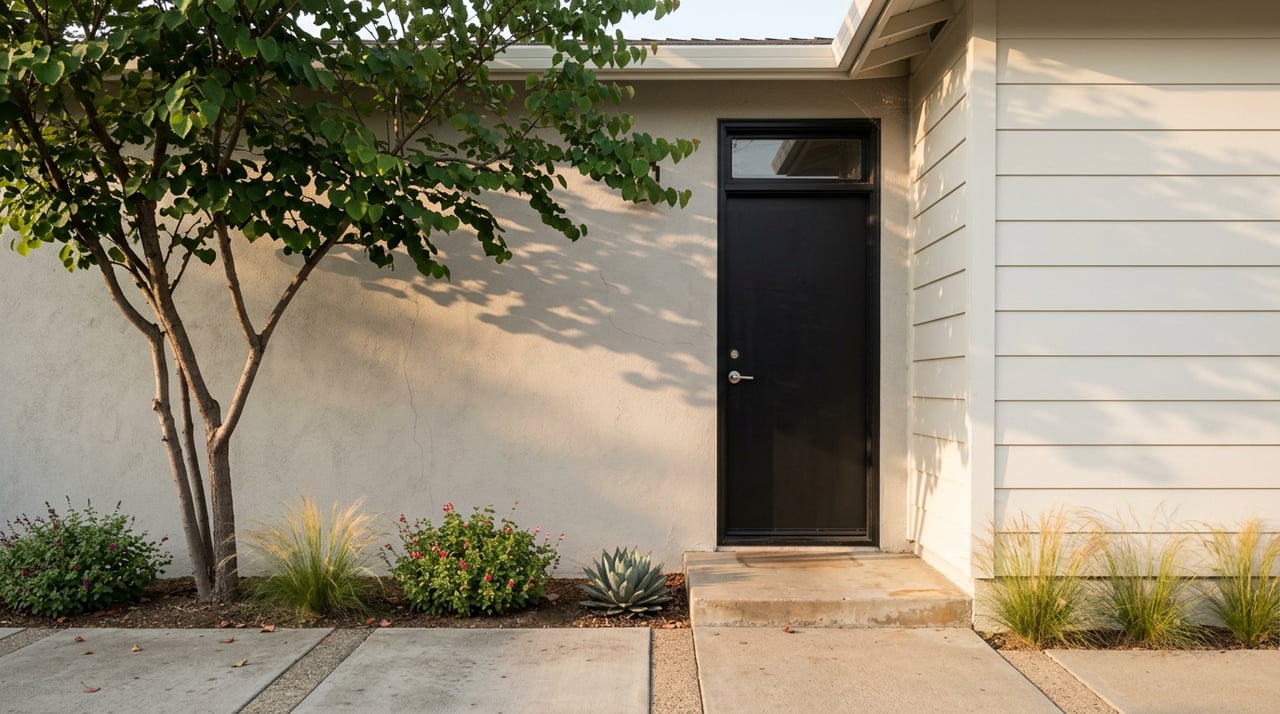
A buyer touring two homes in Winton on the same afternoon will usually notice the same things: similar square footage, similar asking price, similar decade of construction. What she probably won't notice, unless she's looking for it, is a small green meter box at the curb of one house and a pump housing tucked against the fence line of the other. That difference, easy to miss on a walkthrough, is the difference between a monthly utility bill and a private water and wastewater system she now owns outright.
Winton is small enough that people assume it works one way. It doesn't. The Winton Water and Sanitary District serves a core area of roughly one square mile, and everything inside that boundary gets municipal water and sewer. Plenty of homes carrying a Winton mailing address sit outside it, on well water and septic systems instead, because the parcel falls on the ranchette or ag-adjacent fringe rather than inside the district's service map. The address doesn't tell you which one you're getting. The parcel does.
Why the District's Own Numbers Don't Line Up
The clearest evidence that this isn't a minor footnote comes from the district's own recordkeeping. The last time the Winton Water and Sanitary District published a full connection count, back in 2015, it reported 2,559 water connections against 2,492 sewer connections, a gap of 67. That gap means at least some properties draw water from the district but handle their own wastewater separately. It's a small number in absolute terms, but it confirms something worth knowing before you write an offer: municipal water and municipal sewer aren't a package deal in Winton the way they are in most incorporated cities. You can be on one and not the other, and the only way to know for certain on a specific parcel is to ask the district directly or pull the utility disclosure, not to assume based on the neighborhood's reputation.
Recent listings inside Winton's town limits illustrate the split in practice. It's not unusual to find a home marketed with septic tank and well listed plainly as its utility source, sitting a short drive from another home billed monthly by the district for both water and sewer. Same town, same zip code, two completely different ownership costs baked into the property.
What Changes at the Inspection Table
Once you know which side of the line a home sits on, the rest of the transaction looks different depending on the answer.
A home on district water and sewer closes the way most suburban home purchases do. Utility transfer is a phone call to the district office at 6951 N. Winton Way, a signed Owner Utility Agreement, a $250 deposit per unit, and a $10 transfer fee. The inspection focuses on the plumbing inside the walls, not what's buried in the yard.
A home on well and septic adds steps that a buyer coming from a fully municipal market may not expect. Septic tank pumping in Merced County typically runs $300 to $600 depending on tank size and access, and that's before any repair findings. Merced County's septic oversight falls under the county's Environmental Health Division, and whether a point-of-sale inspection is required on a given property depends on the system's age, type, and location, not a blanket county rule. That means the inspection contingency period is doing more work on a well-and-septic property than it would inside the district line, and it's worth confirming directly with the county rather than assuming the prior sale's paperwork still applies.
Here's how the two paths compare at a glance:
| Inside the WWSD Line | Outside the WWSD Line | |
|---|---|---|
| Water source | District supply, metered | Private well |
| Wastewater | District sewer, routed to Atwater's treatment plant | Private septic system |
| Monthly cost | Fixed utility bill from the district | No bill, but owner absorbs maintenance and eventual pump or repair costs |
| Point-of-sale inspection | Standard plumbing inspection | Septic inspection required depending on system age, type, and location per county health division |
| New service setup | Utility transfer through district office | Well and septic already in place, or new well permitting through county |
The ADU Wrinkle Almost Nobody Mentions
If you're eyeing a Winton property with room for an accessory dwelling unit, the water and sewer line matters even more, because the district treats ADU additions as something it actively reviews rather than rubber-stamps. The Winton Water and Sanitary District's board agenda from its July 17, 2025 meeting included direction and discussion on a specific ADU application on Anne Street, alongside a wastewater treatment update and a recurring line item the district calls the "Atwater true-up," a cost reconciliation tied to the interceptor agreement that routes Winton's sewage to Atwater's treatment plant. An ADU add isn't just a building permit conversation in Winton. It's also a conversation with a five-member elected water board that meets to approve individual capacity requests.
The permitting can get more involved if the property is transitioning off a private well toward district service. A Merced County Planning Commission staff report from May 2025, covering a minor subdivision at the Winton Mobile Home Village site on North Winton Way, spelled out the mechanics: a well destruction permit has to come directly from the county's Environmental Health Division, the abandonment has to be handled by a licensed C-57 well driller, and if a new building permit gets submitted before that well is properly abandoned, the county places a hold on it. None of that shows up on a listing sheet. It shows up when your contractor or your agent starts pulling permits.
What the Well 16 Project Tells You About the Homes Inside the Line
If you're specifically looking at property inside the district's service area, there's a current signal worth knowing about. A Notice of Exemption posted April 24, 2026 documents a State Water Resources Control Board-funded project to evaluate restoring the district's inactive Well 16, including water quality sampling, video inspection, and pump testing to determine whether it can be brought back online. That's not routine maintenance. It's the district actively working to add supply capacity, funded in part by the state rather than solely by ratepayers.
For a buyer weighing a district-served home against one that isn't, that's a reasonable point in the district's favor. It signals ongoing investment in the water supply those monthly bills are paying for, at a moment when reliable capacity matters more than it used to across the Central Valley.
What This Means If You're Buying or Selling in Winton Right Now
If you're selling a home on private well and septic, don't wait for a buyer's inspector to surface the system's age and last pumping date. Have that paperwork ready, and be prepared for a longer inspection window than a district-served comparable down the street would need.
If you're buying, ask the question before you fall for the house: is this parcel inside the Winton Water and Sanitary District's service boundary, and is it on both water and sewer, or just one? The district office can confirm it directly, and the answer changes your monthly cost of ownership, your inspection scope, and what it takes to add an ADU down the road.
None of this makes one side of the line better than the other. A well-maintained septic system on a larger lot has real appeal, and a fixed monthly utility bill has its own kind of predictability. What matters is knowing which one you're buying before you're three weeks into escrow.
A Few Questions Worth Asking Directly
How do I find out if a specific Winton address is inside the water district? Call the Winton Water and Sanitary District office directly at 209-358-2367, or check the utility disclosure in your purchase agreement, which should state the water source and wastewater method for that parcel.
Does a septic system affect loan approval in Winton? It can extend your timeline. Lenders and insurers often want to see a recent septic inspection or pumping record, and if the county's Environmental Health Division requires a point-of-sale inspection for that property's age and type, that has to be resolved before closing.
If I want to add an ADU, does it matter if I'm on well and septic versus district service? Yes. District-served parcels go through the WWSD's application and board review. Well-and-septic parcels need county approval for any new septic capacity, and if you're converting toward district service, plan for the well destruction permitting process described in county subdivision filings.
Buying or selling in Winton comes with more local texture than a quick portal search will show you. If you want someone who already knows which side of that line your address falls on, reach out to Martin Villanueva and schedule a free consultation before you write your next offer.